
More Than Just "Chores": The Power of Practical Life in Your Child's Montessori Journey
Walk into any Montessori classrooms, from the nurturing toddlers environments in the YCC (Young Children’s Community) to dynamic Elementary spaces, and you’ll witness children deeply engaged in what Montessorians call “Practical Life” activities. These aren’t simply tasks to keep little hands busy; they are a cornerstone of the Montessori approach, fostering essential skills that lay the foundation for a lifetime of learning, independence, and confidence.
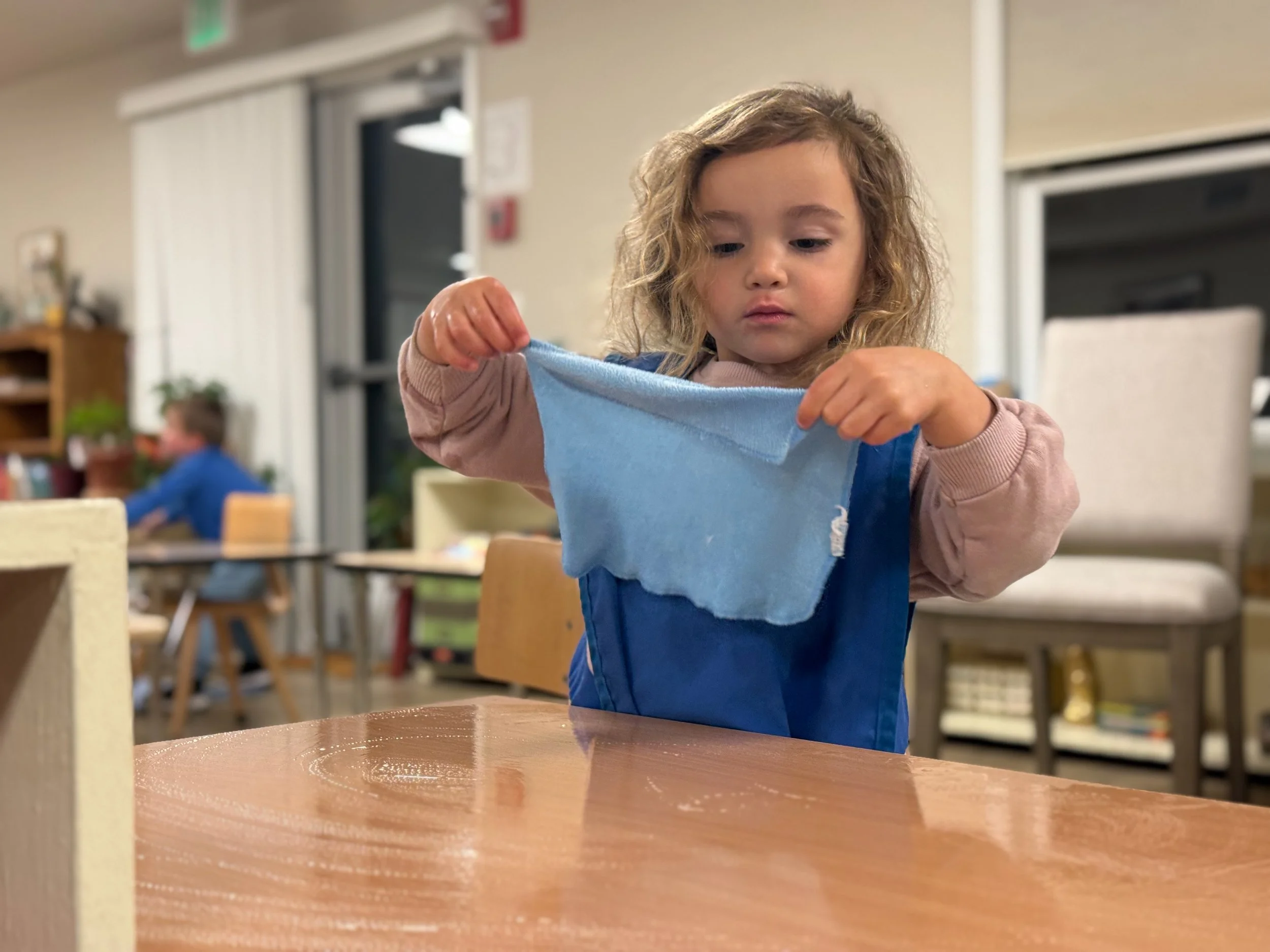
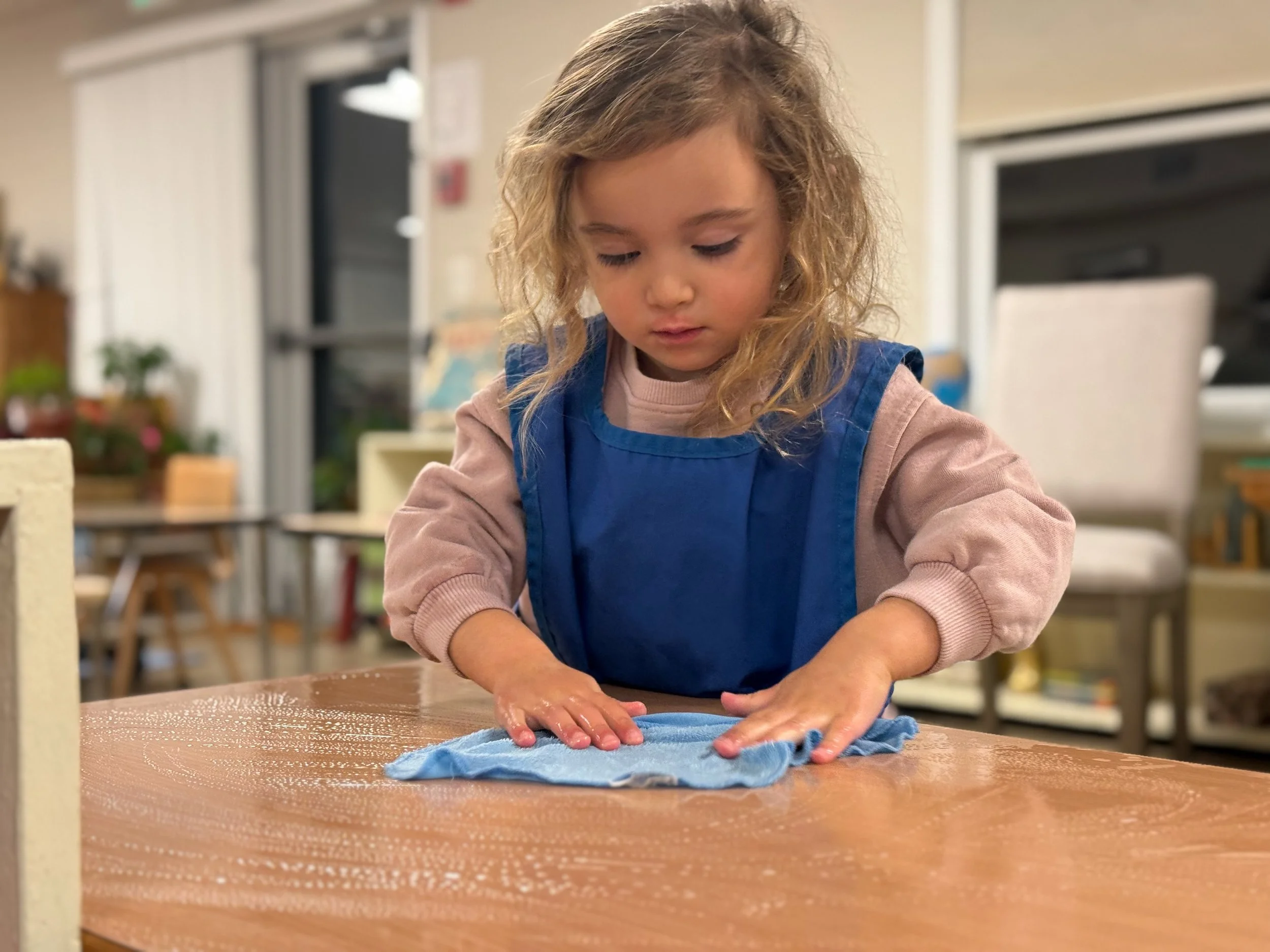
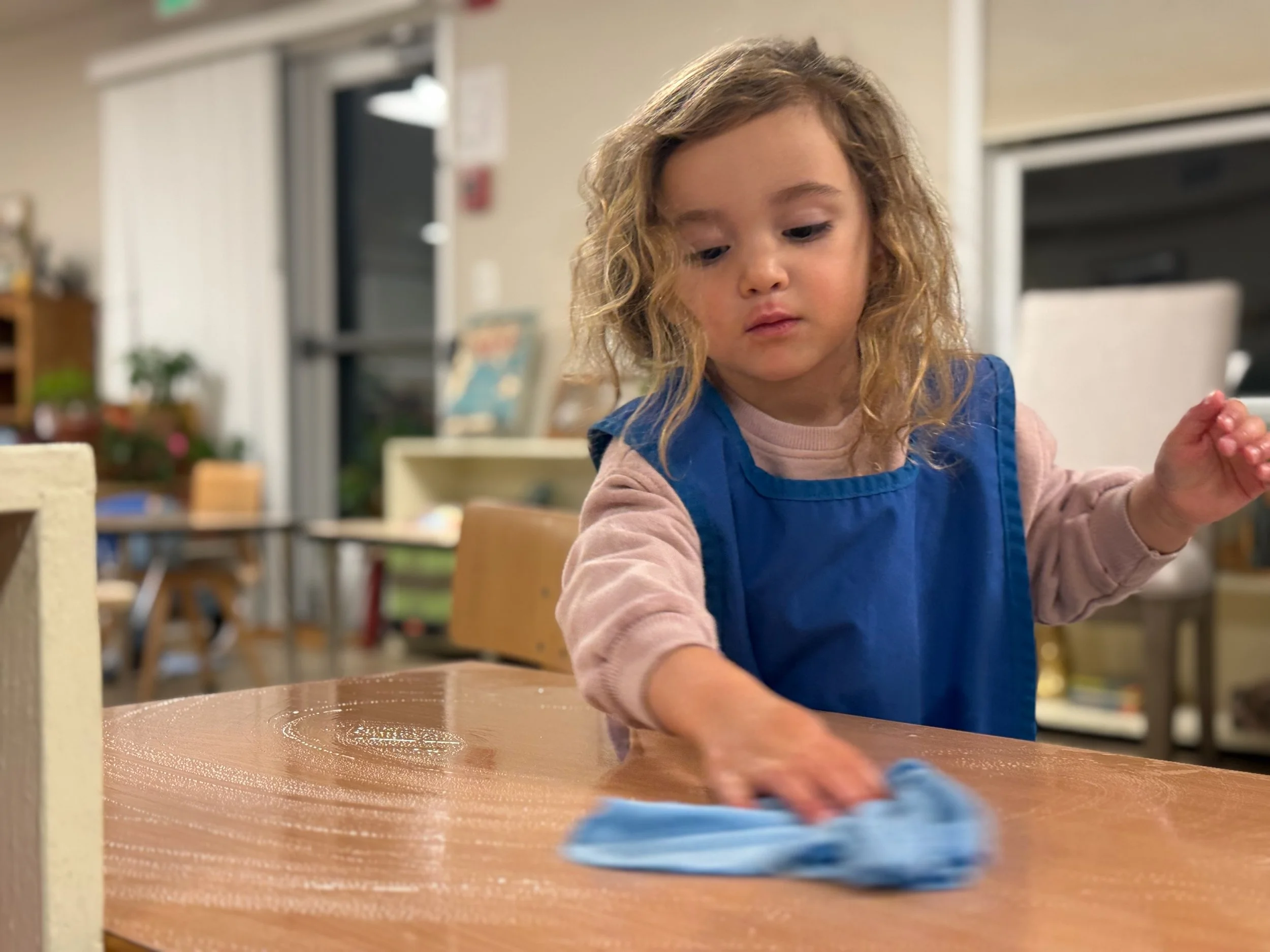
While it may seem that the child is merely involved in domestic chores, they are “in reality busily at work on [their] development—and the method of [their] learning is through movement” (Montessori 2017, 34). The purpose of table washing is, in fact, much more than a clean table.
What is Practical Life in Montessori?
Practical Life activities are purposeful tasks that mirror everyday actions. They revolve around four main areas: Care of Self, Care of the Environment, Grace and Courtesy, and Control of Movement. Practical Life work supports toddlers and preschool-aged children in developing the essential foundations for later work in reading, writing, and mathematics.
From the earliest years, these activities support children in the first plane of development as they build order, coordination, concentration, and independence. Through real work (washing hands, preparing food, caring for their surroundings) children learn how to navigate their world with growing competence and a deep sense of belonging.
As children mature, Practical Life continues to evolve alongside their developmental needs. While older children have already mastered many foundational skills, their work now reflects an expanding social awareness and moral sensibility. At this stage, Practical Life supports an emotionally healthy classroom community while strengthening executive function skills, fostering responsibility, and helping each child understand their role as a contributing member of the group.
The beauty of Practical Life is its seamless progression, adapting to the developmental needs of children as they grow.
The Impact of Practical Life
The benefits of Practical Life extend far beyond the classroom. Take the traditional table-washing activity as an example. Depending on its variation, this work can include up to thirty distinct steps. Following such a carefully sequenced process strengthens concentration and seriation - both essential skills for later academic learning.
In table washing, the child’s consistent left-to-right, top-to-bottom movement offers indirect preparation for reading and writing, while the ordered progression of steps supports the mathematical skill of sequencing. The activity also calls for varied hand movements: slow, deliberate strokes with the brush alongside more energetic motions with the sponge. Together, these actions refine motor coordination, control, and adaptability.
Equally important is the emotional dimension of the work. If water spills, the child simply mops it up. Errors are treated as a natural part of the process, something to be noticed, corrected, and learned from - supporting confidence, resilience, and a growing trust in one’s own abilities.
What This Looks Like in the Classrooms
In the Young Children’s Community (YCC): “Help Me Do It Myself!”:
This is where the foundational skills take root. You’ll see the youngest learners engaged in activities like:
Developing Fine Motor Skills: Pouring water or grains, spooning beans, grasping and transferring objects, polishing objects, and working with dressing frames (zippers, snaps). These build hand-eye coordination and prepare the hand for writing.
Fostering Independence: Learning to wash their hands, wipe their own spills, put on their shoes and coats, toilet, and choose their work. These self-care skills for toddlers are monumental steps toward autonomy.
Care of the Environment: Wiping a table, putting activities away in designated baskets, or watering a small plant. These simple acts instill a sense of responsibility and connection to their surroundings.
Building Concentration: The focused effort required to complete these tasks, even simple ones, lengthens attention spans – a critical skill for all future learning.
In the Primary/Children’s House: Refining Skills and Expanding Responsibility
As children enter the Primary years, Practical Life activities become more complex and refined:
Advanced Care of Self: Preparing their own snacks (slicing a banana, spreading butter), polishing shoes, and mastering more intricate dressing frames.
Elaborate Care of the Environment: Sweeping the floor with a child-sized broom, washing dishes, setting the table for snack, arranging flowers, and caring for classroom plants and animals. These activities cultivate a deep respect for their environment and a sense of community contribution.
Grace and Courtesy in Action: Lessons on how to greet someone, offer help, interrupt politely, and resolve conflicts peacefully are explicitly taught and practiced. This builds crucial social skills for preschoolers, readying them for Kindergarten and beyond. Older children naturally tend to younger classmates, offering help within their own capabilities.
Preparation for Academics: The order, sequence, concentration, and fine motor control developed through Practical Life directly support readiness for reading, writing, and mathematics. Montessori preschool curriculum often emphasizes this vital link.
In the Elementary Program (Ages 6-12): Applying Skills to the Wider World
While Practical Life might look different in an Elementary classroom, the principles and skills continue to evolve and are integrated into more complex, real-world applications:
Planning and Organization: Elementary students take on greater responsibility for managing their time, organizing their work, and planning long-term projects. This could involve planning a class presentation, managing a classroom job schedule, or organizing a community service initiative.
Advanced Care of the Environment & Community: This extends beyond the classroom to include tasks like maintaining a school garden, taking care of chickens and other animals, or cooking for larger groups. Responsibility in children becomes a lived experience.
Economic and Practical Application: Elementary programs incorporate micro-economies where children might run a small business, manage a budget for a class project, or learn practical skills like sewing or basic repairs – truly life skills for kids. At Mountain Shadows, the Elementary kids run an on-going coffee stand at the school, where the funds are used for trips and going outs.
Executive Functioning Skills: The ability to plan, initiate, organize, and follow through on tasks, all honed through years of Practical Life, becomes crucial for more complex academic research and independent study.
Children who engage deeply in these activities develop:
Increased independence and self-confidence
Stronger concentration and focus
Refined fine and gross motor skills
A sense of order and responsibility
Enhanced problem-solving abilities
Greater empathy and social awareness
At MSIMS, we see Practical Life as the nurturing ground for capable, confident, and caring individuals. It’s an integral part of our commitment to authentic Montessori education and fostering a genuine love of learning.
We invite you to visit Mountain Shadows and observe our students purposefully engaged in their Practical Life work, and see for yourself how these foundational activities empower children and set the stage for a successful and fulfilling educational journey.
Contact us today to schedule a tour and learn more about our programs from YCC through Elementary.
