
Parents often notice that Montessori classrooms feel calm, intentional, and deeply thoughtful. What is less visible is the elegant structure guiding how learning unfolds beneath the surface.
One of the most enduring tools in Montessori education is the Three-Period Lesson. In Montessori classrooms, a lesson is how a Guide introduces a new concept, idea, or piece of language to a child. Rather than presenting information through a textbook or lecture, the adult gives a brief, carefully structured presentation using hands-on materials or experiences.
Originally developed through the careful observation of Maria Montessori, the Three-Period Lesson provides a simple structure for these presentations. It allows the Guide to introduce new ideas clearly, give the child time to work with the concept independently, and later confirm understanding without pressure.
Across all planes of development, the Three-Period Lesson serves the same essential purpose:
to introduce new information clearly
to allow the child time and space to work with it independently
to confirm understanding through expression, use, or synthesis
Let’s look at how the Three-Period Lesson unfolds as the child grows across the planes of development.
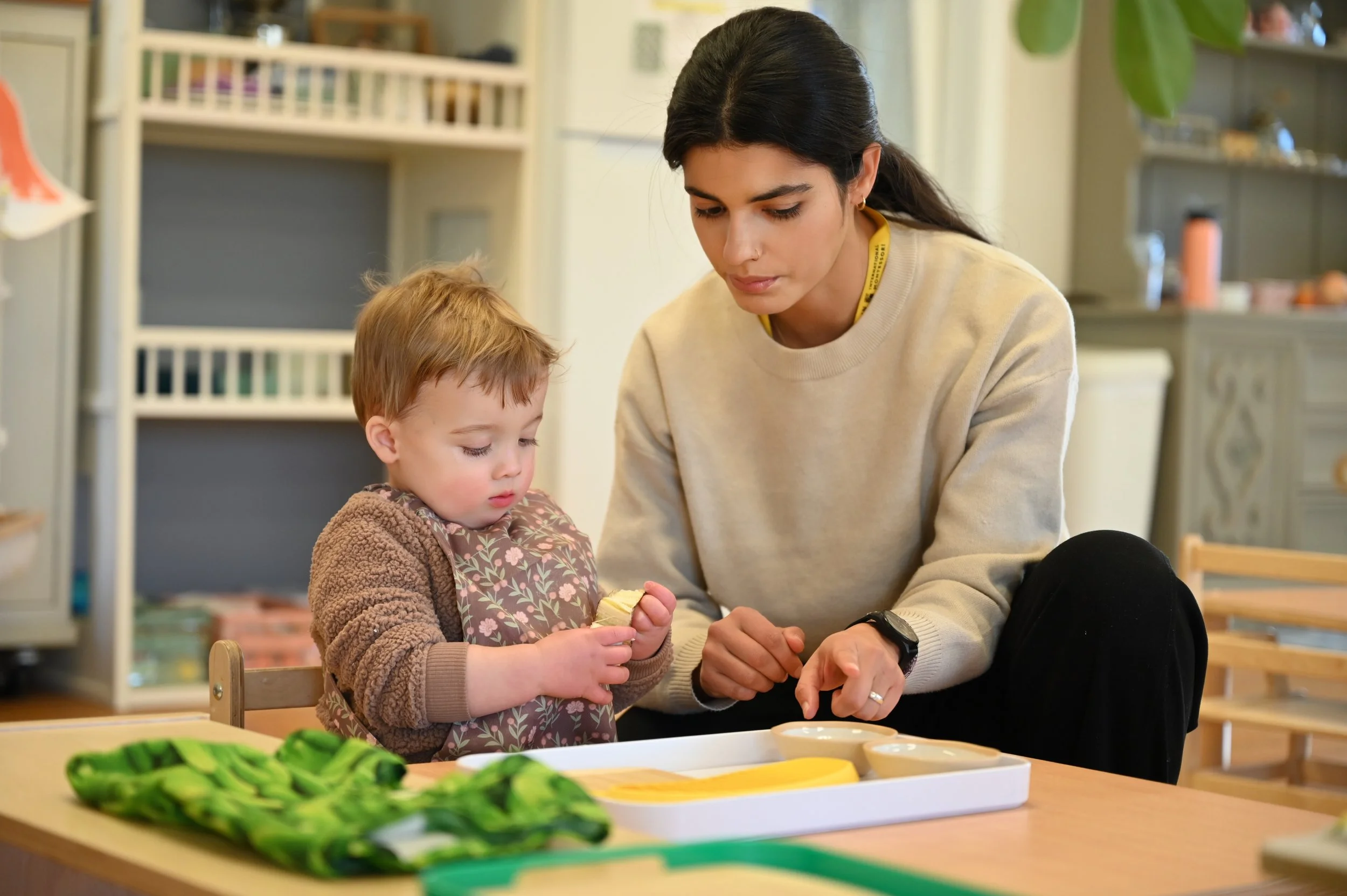
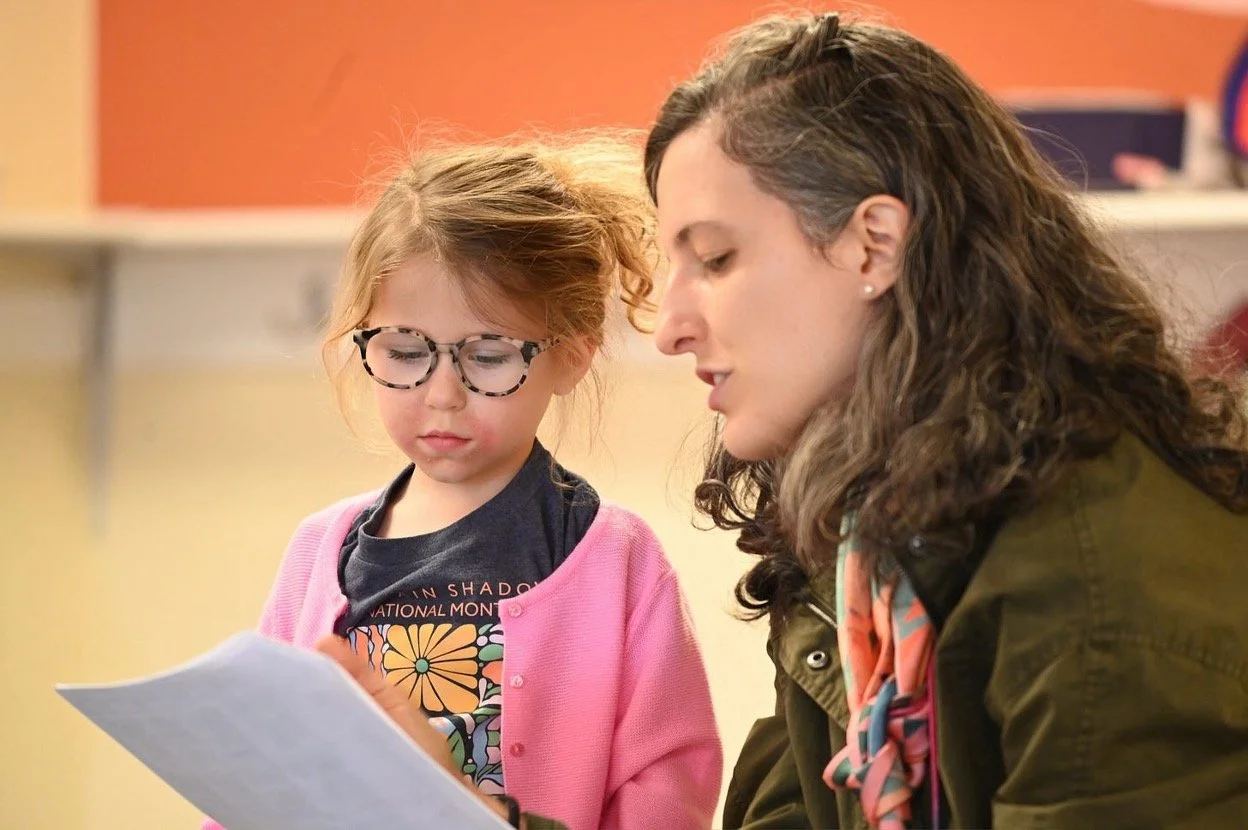
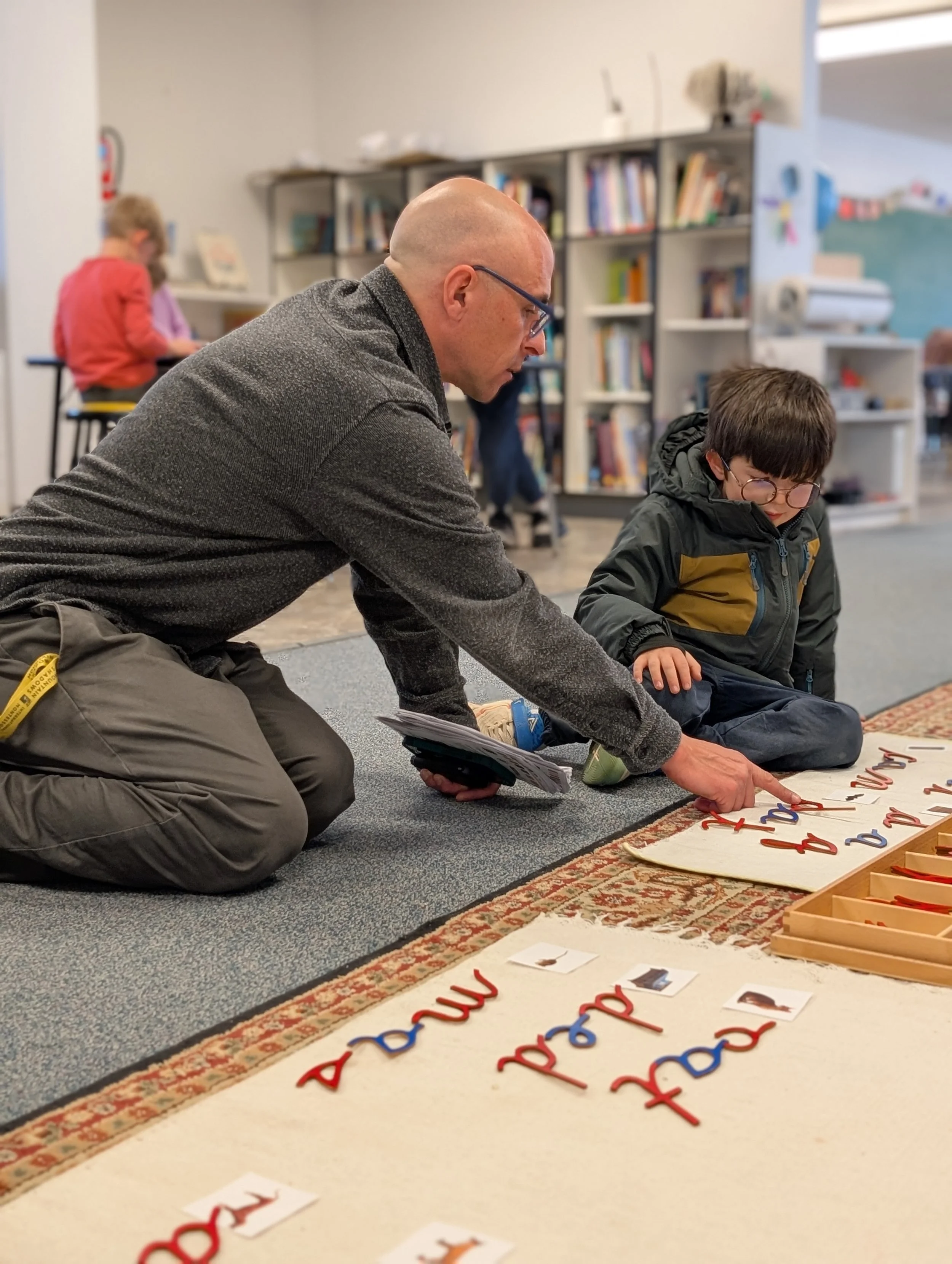
First Plane of Development (Birth–6yo): Language, Order, and the Absorbent Mind
In the first plane of development, children possess what Dr. Montessori called the absorbent mind: an extraordinary capacity to take in language, movement, and culture effortlessly from their environment. Here, the Three-Period Lesson is most often used to build vocabulary, clarify concepts, and create precise mental images of the world.
Period 1: Name Association (“This is…")
The Guide introduces language with precision and minimal words: “This is a cube.”; “This is rough.”; “This is maple.”.
There is no expectation of response. The child’s role is simply to receive. This respects the child’s natural learning process and avoids unnecessary pressure.
Period 2: Recognition Through Engagement (""Can you show me…?”)
This is the longest and most active phase of the lesson. The child is invited to engage physically and meaningfully through:
pointing
matching
moving objects
responding physically rather than verbally
Responses are often nonverbal. This allows repetition, movement, and self-correction through experience rather than performance.
Period 3: Recall (“What is this?”)
Only when the child shows readiness does the Guide invite recall. If hesitation appears, the lesson simply returns to Period 2 without judgment or correction. This structure protects the child’s confidence while building a strong foundation for language, classification, and later academic work.
Second Plane of Development (6–12): Imagination, Reasoning, and Inquiry
As children enter the elementary years, development shifts dramatically. Children seek meaning, connection, and moral understanding. They use imagination and reasoning to explore not just what the world is, but why it works the way it does. The Three-Period Lesson evolves accordingly.
Period 1: Stimulation
Rather than naming, the Guide now introduces a big idea, problem, or question that spark curiosity:
a story
a chart
a demonstration
a compelling question
This period ignites interest and invites intellectual work rather than passive reception.
Period 2: Exploration
Independent investigation and imagination. Elementary children now take the lead:
researching
building
writing
collaborating
experimentation
This period may last days or weeks. The Guide observes, supports, and offers additional lessons as needed, trusting the child’s drive to investigate.
Period 3: Sharing
Articulation and reflection. Understanding is demonstrated through:
presentations
written work
peer discussion
teaching others
Learning becomes social, reflective, and deeply meaningful - all hallmarks of authentic Montessori elementary education.
Third Plane of Development (12–18): Purpose, Society, and Contribution
In adolescence, development centers on identity, social belonging, and purposeful work. Learning must feel relevant, real, and connected to the wider world. Here, the Three-Period Lesson expands into collective, interdisciplinary experience.
Period 1: Purpose and Need
The adult introduces a real-world context:
a community or societal need
a shared goal
a division of responsibility
This speaks directly to the adolescent’s need for relevance and contribution.
Period 2: Work by Doing
Students engage in meaningful action through:
hands-on labor
collaboration
problem-solving
accountability
Learning emerges from responsibility, effort, and real consequences.
Period 3: Product and Synthesis
Understanding is demonstrated through:
completed projects
reflection
interdisciplinary integration
contribution to others
This mirrors adult work and honors the adolescent’s emerging role in society.
Why the Three-Period Lesson Matters
Across all planes of development, the Three-Period Lesson protects what Montessori education values most:
learning without pressure
understanding over memorization
respect for developmental readiness
independence within limits
confidence rooted in real mastery
It is one of the reasons authentic, AMI-aligned Montessori environments feel fundamentally different from conventional schooling. The Three-Period Lesson is not about efficiency or performance. It is about trust: trust in the child’s developmental timing, trust in the learning process, and trust that deep understanding grows best when it is invited, not forced.
Families interested in learning more are warmly invited to contact us to ask questions or schedule a tour.
