
The Purpose of Mixed-Age Classrooms
Choosing a school for your child invites many questions. One of the most common we hear from families exploring Montessori education is this:
Why are children grouped across three years instead of by single grade levels?
In Montessori education, this structure is not incidental. It is intentional, rooted in Dr. Maria Montessori’s observations of human development and refined over more than a century of practice.
At Mountain Shadows Montessori School, our Young Children’s Community (1–3), Primary (3–6), and Elementary (6–12) classrooms each span three years. This mixed-age structure supports the developmental needs of the child in ways that extend far beyond academics.
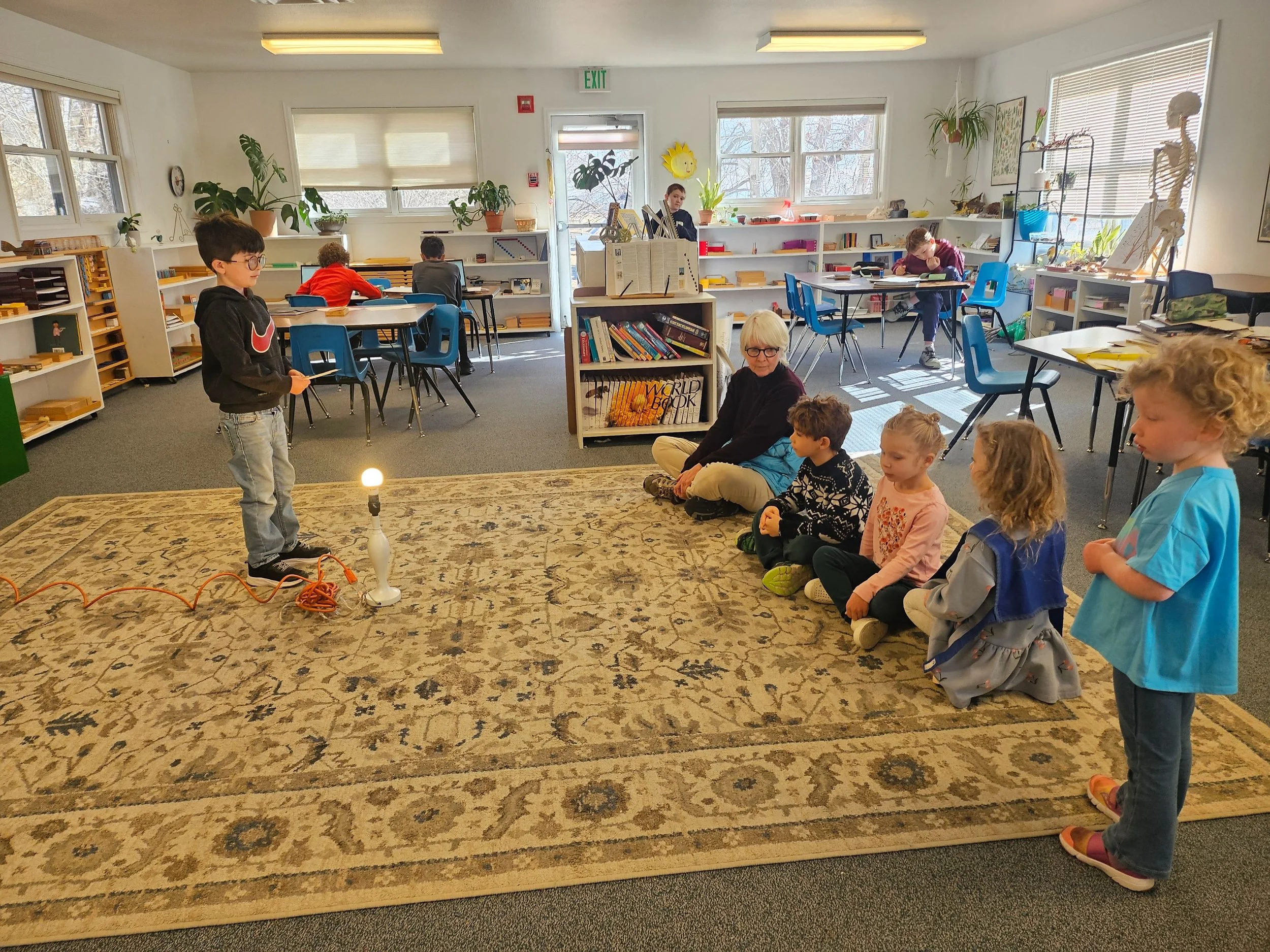
The Three-Year Cycle and the Planes of Development
Dr. Montessori identified distinct planes of development. Within each plane, children move through phases of rapid growth, consolidation, and increasing social awareness.
The three-year classroom cycle mirrors this rhythm:
The first year is often a time of orientation and observation.
The second year brings deeper engagement and growing independence.
The third year offers consolidation, mastery, and leadership.
Rather than resetting socially and academically each year, the child grows within a stable community. Maria Montessori wrote:
“Education is a natural process carried out by the child and is not acquired by listening to words but by experiences in the environment.”
Education for a New World
The mixed-age classroom expands those experiences.
Learning Through Observation
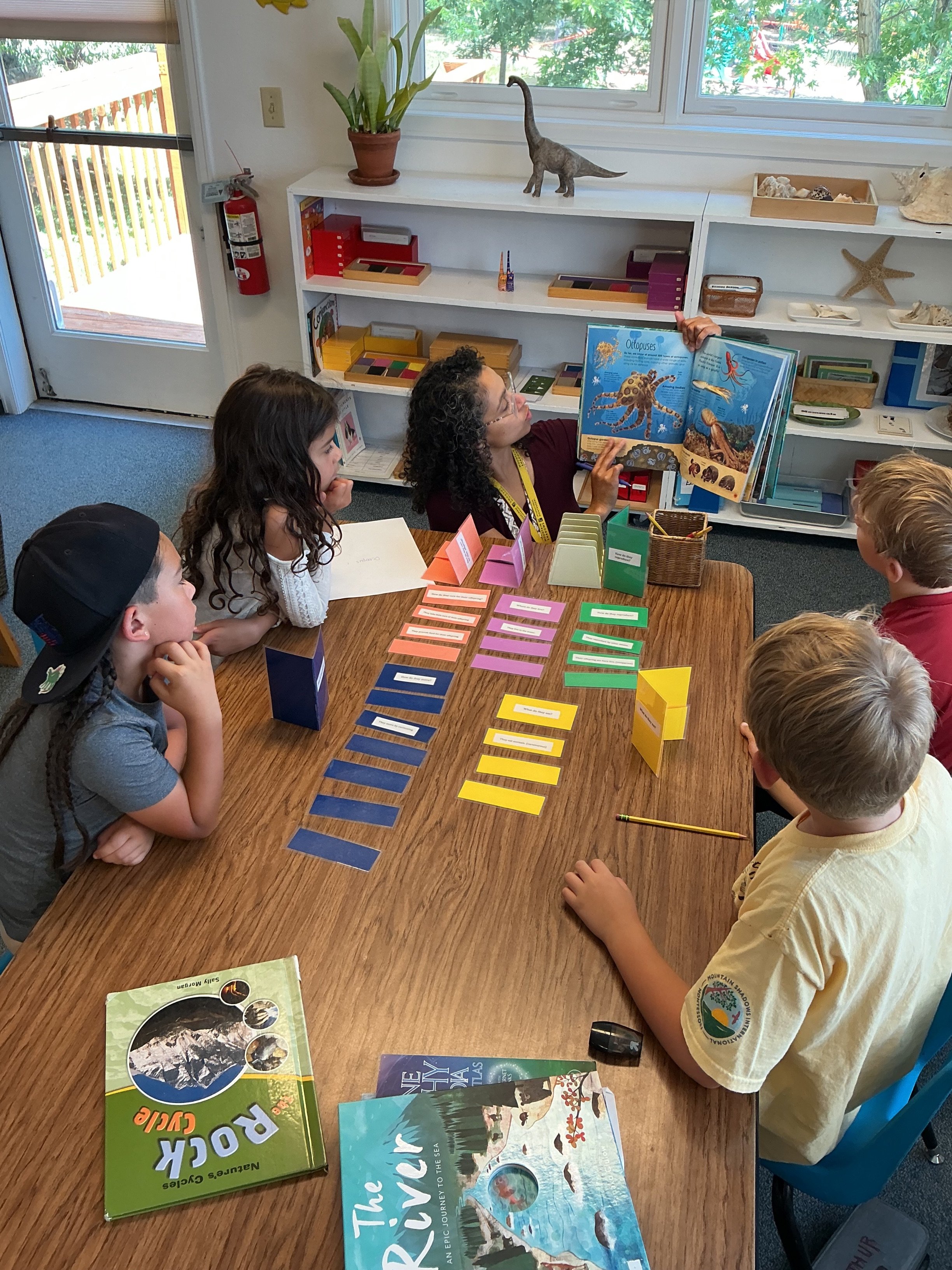
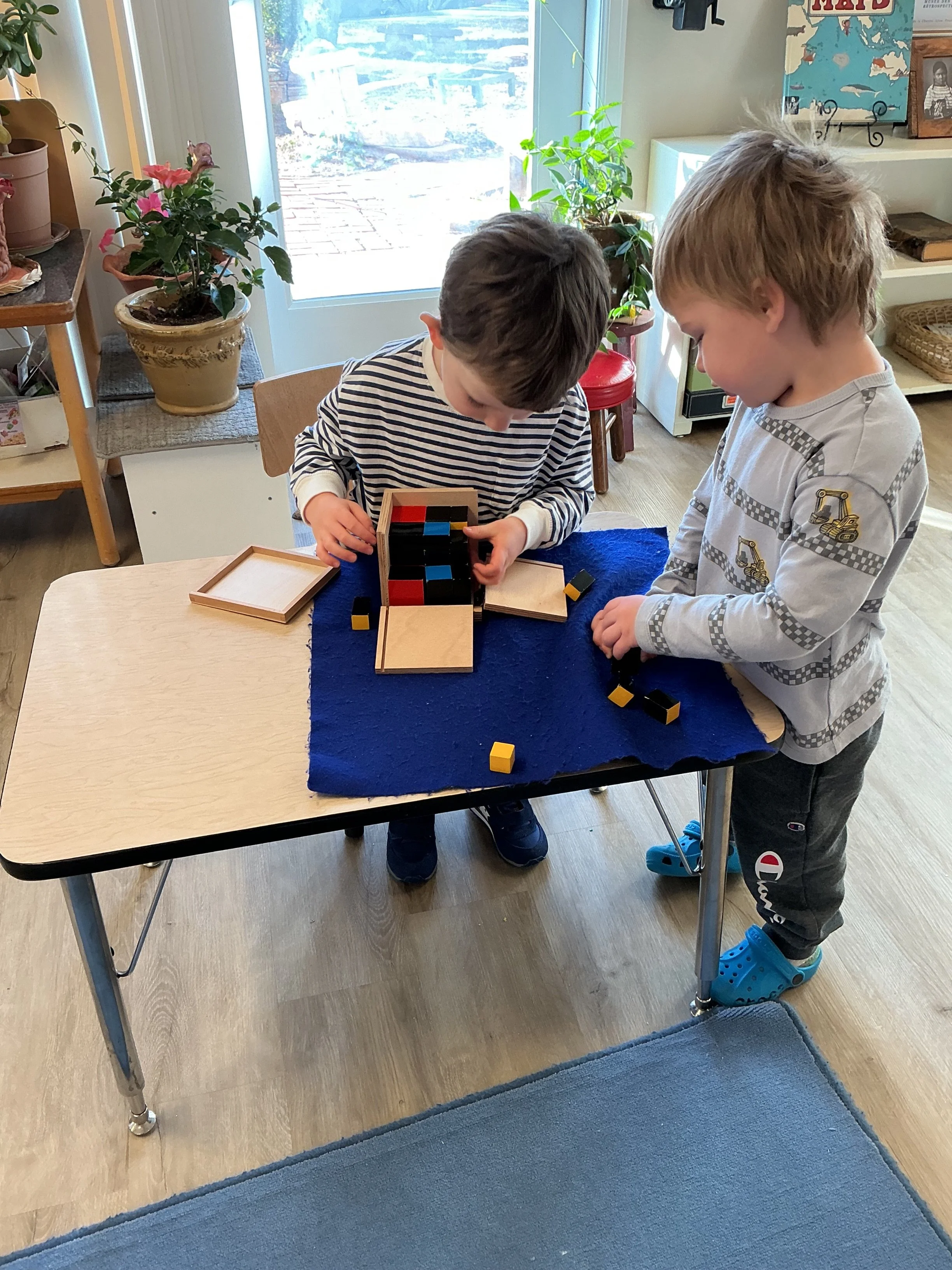
In the Primary classroom, younger children absorb not only language and movement but also the culture of the classroom itself.
They watch older peers prepare food, compose phonetic words, complete mathematical work, and resolve social challenges with grace. These experiences act as indirect preparation and interest is sparked naturally, without pressure.
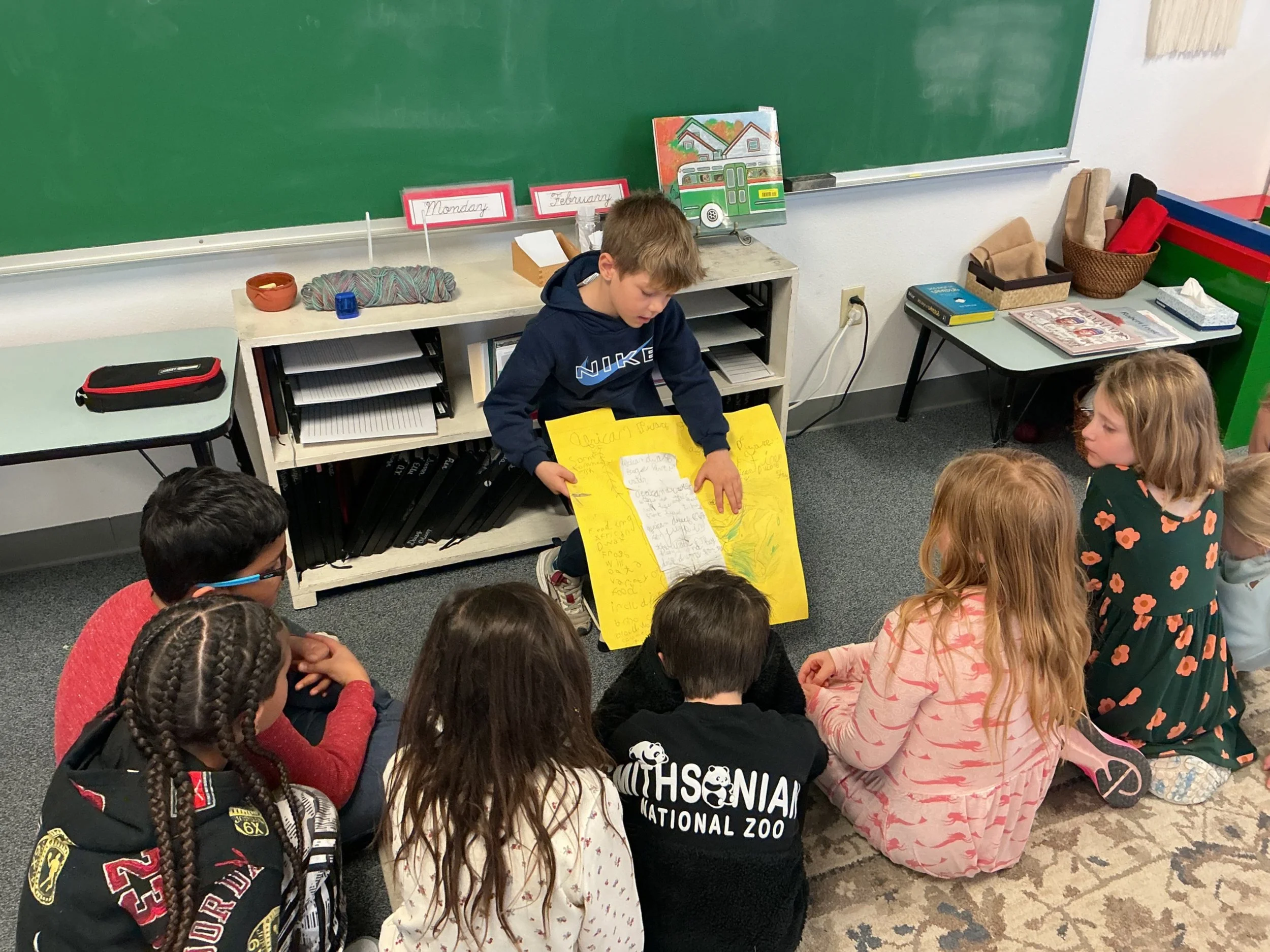
Older children, in turn, deepen their own understanding by re-presenting materials and modeling careful work. Teaching the younger children clarifies their thinking and in turn, leadership grows organically.
As Montessori observed:
“There is a community spirit in the children.”
The Absorbent Mind
The mixed-age classroom makes space for that spirit to emerge and the classrooms function as small communities, where everyone has a role and a purpose.
In our Primary classrooms, younger children may observe older peers writing stories with the moveable alphabet. Months later, those same children approach the material with readiness and familiarity.
Social Development and Moral Growth
In the Elementary years (6–12), children enter what Montessori described as the second plane of development. This is a period marked by a strong orientation toward fairness, justice, and belonging.
Mixed ages support this developmental stage in practical ways:
Older children assume responsibility for the well-being of the group.
Younger children experience security within a community that knows them.
Conflicts are resolved within an established social structure rather than among constantly shifting peer groups.
The result is not competition, but interdependence. In nurturing this community spirit, the classroom becomes preparation for participation in society where the mixed-age environment clearly supports the development of the whole child.
In our Elementary environment, students collaborate across ages on research projects, going-outs, and other initiatives. Leadership is not assigned, it emerges through experience.
Individualized Learning Within Community
Montessori education is often described as individualized, but this does not mean isolated.
Within a mixed-age environment, children progress according to readiness. A younger child may begin advanced language work earlier than expected. An older child may revisit foundational materials to solidify understanding.
Because the classroom is not bound to a single-year curriculum, there is space for true mastery.
Dr. Montessori emphasized that development unfolds according to an inner timetable. The three-year span allows that timetable to be respected.
Continuity of Relationship
In authentic Montessori environments, children remain with the same Guide for the full three-year cycle.
This continuity allows the adult to observe deeply and respond precisely. Rather than spending months learning a child anew each year, the Guide builds on prior understanding.
Over time, the classroom community becomes increasingly self-sustaining.
Montessori described the goal of the classroom as a state in which children are deeply engaged, independent, and socially harmonious. She wrote:
“The greatest sign of success for a teacher… is to be able to say, ‘The children are now working as if I did not exist.’”
— The Absorbent Mind
This level of independence depends on stability, and stability grows within the mixed-age and 3-year structure.
Completing the Cycle
One of the most significant aspects of Montessori education is completing the full three-year cycle.
The final year, whether kindergarten in Primary or sixth grade in Elementary, is not merely a culminating academic year. It is a developmental shift.
The child who once observed now leads.
The child who once needed guidance now offers it.
Completion brings confidence grounded in experience and contribution to community.
As an AMI-recognized Montessori school, Mountain Shadows Montessori School maintains the mixed-age structure because it reflects Montessori’s original design and continues to serve children well today. This structure reflects careful observation of how children grow socially, intellectually, and emotionally over time.
Families interested in learning more are welcome to contact Mountain Shadows Montessori School to ask questions or schedule a tour.
