
How We Track Progress Without Grades
Many parents wonder: Without grades, how do I really know my child is learning?
It is a fair question. Most of us grew up equating progress with report cards, percentages, and test scores. When those familiar markers disappear, it can feel uncertain.
In a Montessori school, progress is not reduced to a number. Instead, it unfolds through a developmental cycle: introduced → practiced → mastered. This process reflects how children naturally construct knowledge: through curiosity, repetition, and independence.
1. Grades can reduce intrinsic motivation
Research in motivation psychology suggests that when learning becomes closely tied to external evaluation, students may shift from curiosity-driven exploration to performance-driven behavior. Instead of asking, “What can I discover?” children may begin asking, “What will earn the best score?”
Research on fixed and growth mindset also suggests that when intelligence is treated as something measured and ranked, students may become more cautious about taking on challenging work.
Over time, this shift can reduce intellectual risk-taking and dampen the natural desire to engage deeply with challenging material.
2. Grades can increase anxiety and reduce cognitive performance
Studies on academic stress indicate that high-stakes evaluation can elevate anxiety levels in students. When anxiety increases, working memory, the cognitive system responsible for holding and manipulating information, can become less efficient.
In other words, the pressure to perform can interfere with the very thinking processes needed for learning.
3. Grades can encourage surface-level learning
Research distinguishing mastery-oriented and performance-oriented environments suggests that when evaluation is emphasized, students may prioritize memorization and short-term recall over deeper conceptual understanding.
When the focus shifts to “What will be tested?” rather than “What does this mean?”, learning can become narrower and less durable.
Montessori education takes a different path. The classrooms are intentionally structured around mastery. The child is free to revisit material, correct errors independently, and deepen understanding without the pressure of comparison.
The Montessori Progress Cycle: Introduced → Practiced → Mastered
Introduction: A Seed Is Planted
A lesson in Montessori is brief, precise, and intentional.
A five-year-old kneels beside a mat as her Guide carefully lays out golden beads: units, tens, hundreds, thousands. There is no worksheet. No timer. No announcement of a test.
A YCC child sees a pouring lesson for the first time
A Primary child explores the Golden Beads
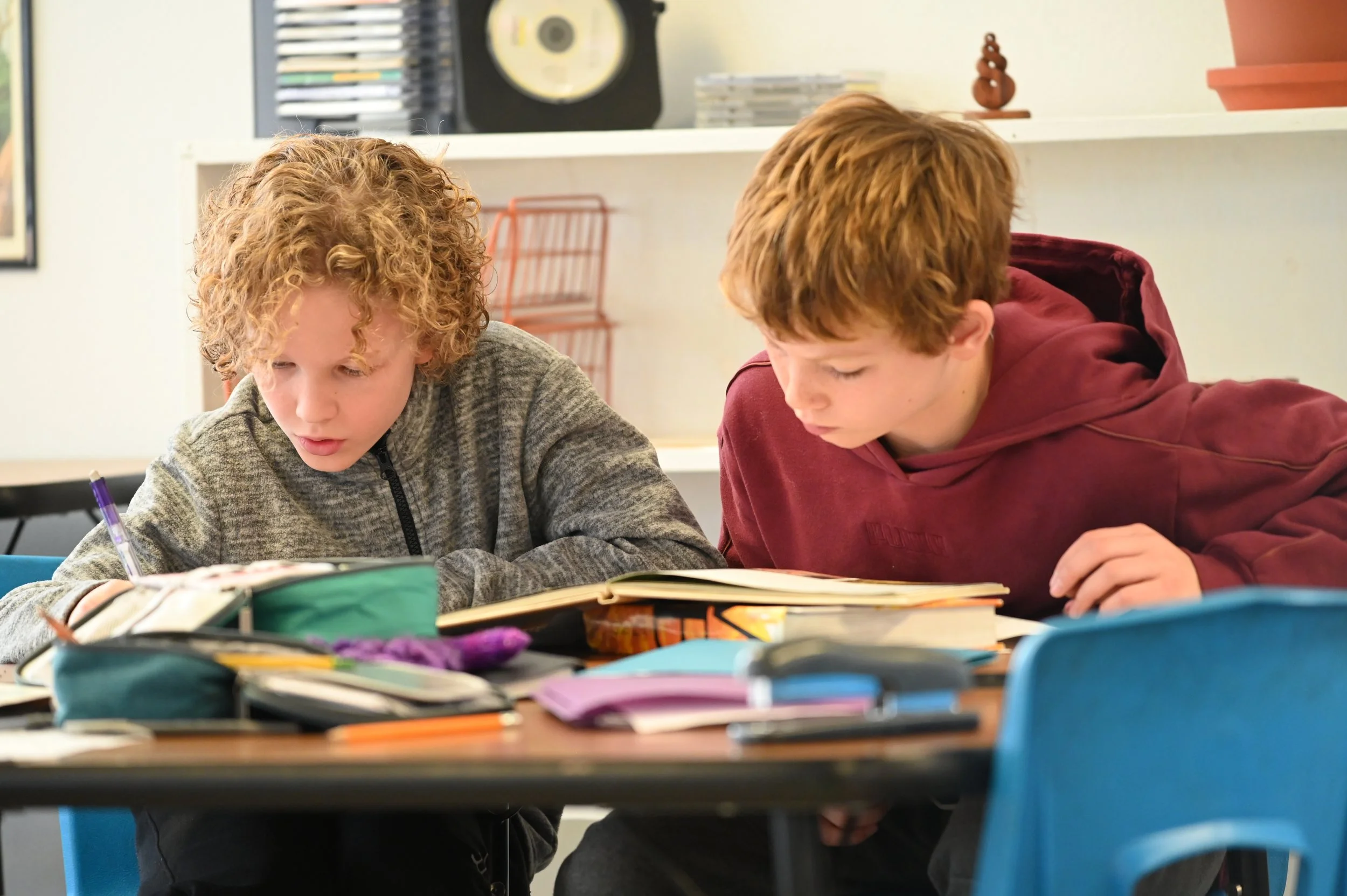
An Elementary student encounters a Great Lesson and begins a research journey
After the introduction, the child is not tested. Instead, the lesson is simply made available. Guides observe silently, honoring the Montessori principle that the child is the constructor of knowledge.
The spaces are intentionally designed for independence, concentration, and purposeful activity.
Practice: Understanding Deepens Through Repetition
The next day, the child chooses the Golden Beads again. She lays them out across the mat. She makes exchanges. She repeats. She pauses. She tries again.
Practice is the heart of Montessori learning. During the uninterrupted work cycle, children choose materials freely and repeat them as often as needed.
In the YCC (1-3y), practice often looks like repeating Practical Life tasks: pouring, spooning, washing, dressing frames, until movement becomes more coordinated, controlled and precise.
In Primary (3-6y), children return repeatedly to sensorial, language, and math materials, each time refining understanding and strengthening concentration.
In Elementary, practice expands into imaginative, collaborative, real-world work:
research projects
Going Outs into the community
planning and organizing tasks
caring for the school garden and animals through a farm program
Mixed-age classrooms strengthen this stage. Younger children observe advanced work. Older children solidify mastery by mentoring.
Mastery: Independence and Integration
A concept is mastered when a child can use it:
independently
accurately
consistently
and in new or spontaneous contexts
Examples:
A Primary child preparing snack independently
A reader selecting and discussing increasingly complex books
An Elementary child applying math or geometry while working on a Farm Program project
Montessori mastery shows up in action and supports long-term learning, emotional regulation, and executive functioning.
How Progress is Documented
Although Montessori does not assign grades, there are clear, ongoing insights into their child’s development.
Montessori-trained Guides track through daily observation:
when lessons are introduced
how often a child returns to practice
where errors persist
when corrections become internalized
when knowledge transfers across subjects
how social and emotional growth supports academic work
Families receive insight through:
classroom documentation
parent–teacher conferences
written reports
Invitations to observe the classroom
This provides a multi-dimensional understanding of growth, not just an academic snapshot.
Learning That Extends Beyond the Gradebook
Montessori students are not unfamiliar with assessment. They do take state tests as required.
The difference is that testing does not drive daily learning. Because children at Mountain Shadows develop deep conceptual understanding, concentration, and independence, tests become one small data point - not the definition of their ability.
Progress in Montessori is guided by readiness rather than external deadlines. Children move forward when they are developmentally prepared, not when a calendar demands it. This protects natural development and allows understanding to take root fully before new challenges are introduced.
Without the pressure of grading, children often experience a calmer and more joyful relationship with learning. They are free to wrestle with difficult material, make mistakes, and try again without fear of a score attached to the effort.
Over time, this fosters genuine ownership. Children choose work because they are curious. They persist because they want to understand. They return to a lesson because something within them is still unfolding.
The result is growth that extends far beyond academics. Progress is seen in:
independence
collaboration
curiosity
stewardship
concentration
problem-solving
These qualities are not easily captured on a report card. Yet they are foundational to authentic Montessori education and to the standards that guide our work at Mountain Shadows.
Families who would like to see this mastery-based approach in action are warmly invited to schedule a tour and observe how learning unfolds in our classrooms.
